Mechanical Seal Technical Blog
Choose a reading path for the job in front of you: identify a replacement, understand the seal support system, or prepare for maintenance. This technical library connects mechanical seal fundamentals with the dimensions, operating records and inspection details needed for a useful engineering discussion.
Start with your maintenance question
Which replacement should I compare?
A familiar model name is a starting point, not a fit confirmation. Compare the full designation, shaft or sleeve diameter, working length, stationary seat and material combination before discussing interchangeability.
Use the John Crane replacement guide or Burgmann replacement guide to navigate the relevant models.
What surrounds the seal faces?
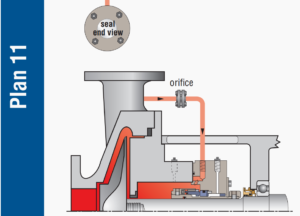
Read the seal arrangement together with its piping. Identify where each connection starts and ends, which fluid it carries, and what pressure or temperature is actually measured. A piping-plan number alone does not describe every operating condition.
Begin with seal and piping-plan fundamentals, then explore the Plan 11 article.
What should I record before repair?
Build a timeline: installation, first start, changes in duty and the first observed leakage. Keep photographs and measurements with the equipment reference so the inspection can be compared with the original service conditions.
Read the mechanical seal maintenance article and use the preparation checklist below.
Prepare a seal review in four steps
- Identify the assembly. Record the pump maker, pump model and complete seal marking. Photograph the assembled arrangement and nameplate; label dimensions with units and measurement locations.
- Describe the duty. Include the liquid, concentration or solids where relevant, normal and maximum temperature, shaft speed, and the pressure measurement location. Distinguish measured values from estimates and leave unknowns clearly marked.
- Record the symptom. State whether leakage appears at rest, during start-up or after a period of running. Note recent changes in operation, flushing or maintenance. A symptom guides investigation; it does not establish the failed component by itself.
- Compare before ordering. Check the drawing, materials and installation requirements against the actual assembly. Keep the equipment manual and approved service procedure available for the final review.
Example: a seal marked “35 mm”That dimension may help identify a shaft size, but it does not confirm the seat fit, working length, drive arrangement or compatibility with the pumped liquid. A useful enquiry pairs the marking with a dimensioned sketch and operating data rather than asking for a match from a photograph alone.
New to mechanical seals?
Start with what a mechanical seal is, then read pump mechanical seal technology. Return to the relevant reading path when you have a specific replacement or maintenance question.
These articles support preparation and discussion. Equipment-specific drawings and approved isolation, installation and commissioning procedures govern the work. For a product enquiry, contact Fluid Tech Service with the available measurements and duty details.
Browse all technical articles
The article list below brings together the library's replacement, design and maintenance topics.